Numbers without a mechanism are marketing. Every figure below is tied to how it is produced, how it is measured and where it came from.
1,000+
Farmers connected
Email Deck, June 2026 — Impact
150+
Rural producers registered
Email Deck, June 2026 — Impact
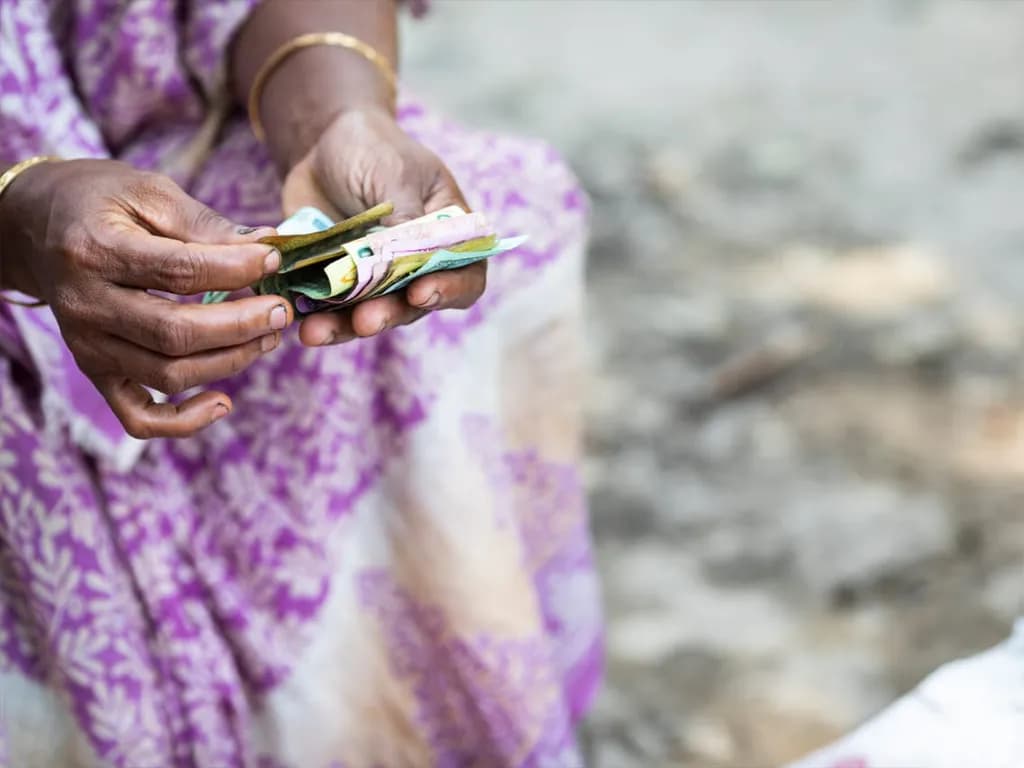
৳ 1.02 Cr
Capital mobilised
Email Deck, June 2026 — Funding
70%
Women participation
Overview Deck, July 2026 — Traction
15%
Persons with disabilities
Overview Deck, July 2026 — Traction
Figures are as reported in the June and July 2026 investor decks. Independently verified figures will replace them as the measurement framework matures.
Impact statement
Eleven outcomes, stated plainly
DigiGram Ventures Ltd. was established to deliver inclusive finance, quality and affordable inputs, periodic training and market access — in order to produce the following changes for 50,000 smallholder farmers, particularly women and persons with disabilities, living below or near the poverty line in rural Bangladesh.
1Increased volume of inclusive finance
2Quality and affordable inputs
3Effectiveness of training
4Increased market access
5Improved financial resilience
6Increased household savings
7Improved micro-entrepreneurial skills
8Improved production yield
9Fair and transparent pricing
10Increased economic agency for rural women producers
11Increased income of smallholder farmers
Outcomes 1–4 are the delivery mechanisms; 5–11 are the changes they are intended to produce.
Key value drivers
The problems we solve
Rural poverty
20.5% of Bangladesh's population lives below the poverty line and 10.5% in extreme poverty (BBS 2022). 75% of the rural population — the base of the pyramid — depends on agriculture, livestock and small-scale production, held back by limited access to finance, markets, quality inputs and training.
Gender gap
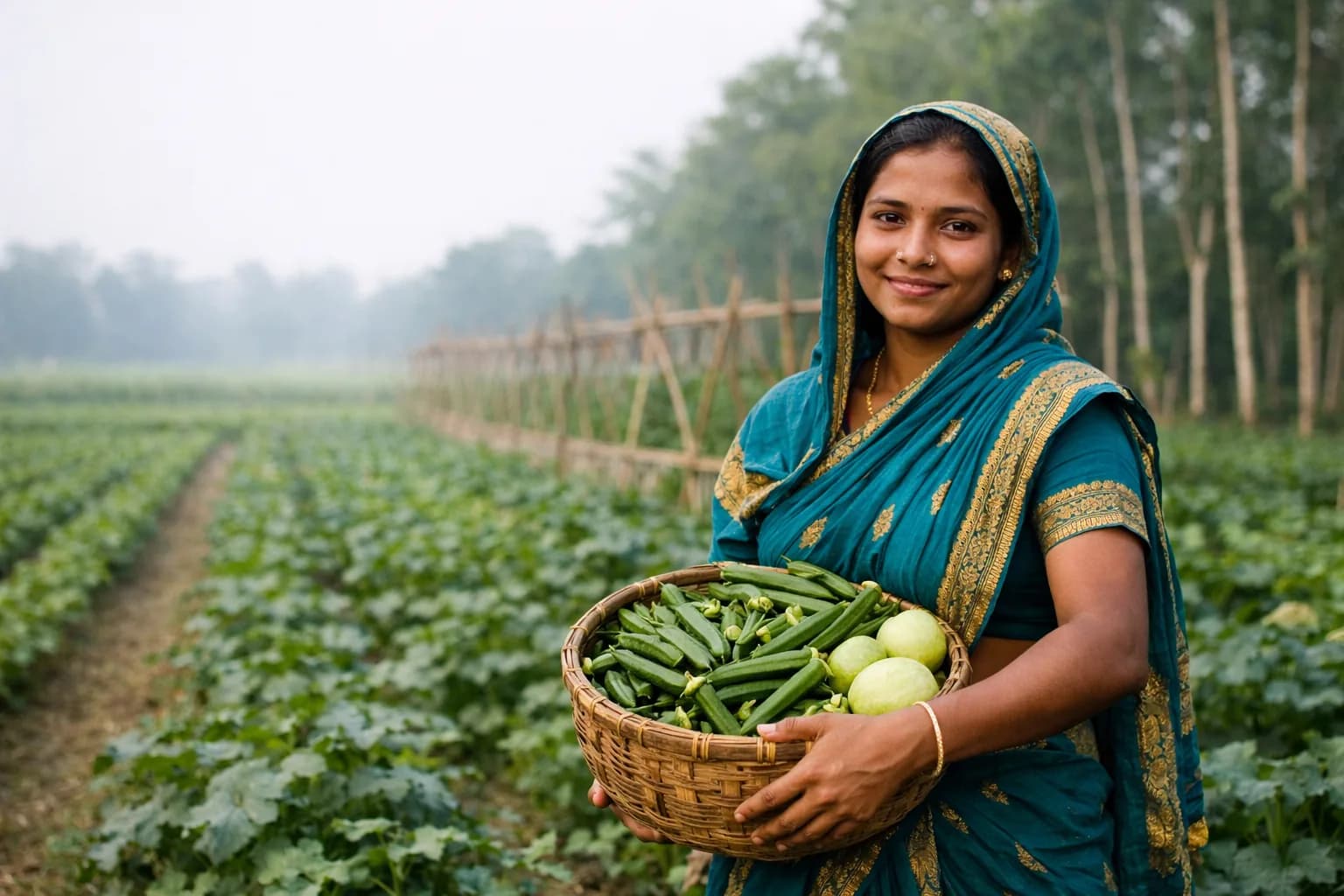
Women are central to agriculture and the RMG industry yet face a 22% gender pay gap. Despite a 136% increase in female agricultural labour in Bangladesh, women still lack resources and face socio-cultural barriers. Closing these gaps could raise farm yields by 20–30%.
Disability
Over 9% of Bangladesh's population lives with a disability, yet only 1 in 10 participates in the labour force. Barriers to education, employment and financial services block economic participation and financial independence.
Environment
Inefficient waste management in the production and use of single-use plastics degrades the environment and holds back progress on climate action. We promote sustainable agriculture, waste management and reduced single-use plastic across our projects.
Theory of change
Input to impact
01
Input
Digital tools, capital and market access through partnerships; investment raised for rural producers and operations.
02
Activity
Inclusive projects in agriculture, livestock, crafts and eco-friendly goods; SOPs for risk mitigation; partnerships for market expansion.
03
Output
Empowered rural producers, increased digital literacy, and expanded market access for their products.
04
Outcome
Improved financial independence, reduced poverty and greater environmental sustainability for rural communities.
05
Impact
Rural economies transformed — poverty reduced, gender equality advanced, sustainable growth aligned with the SDGs.
Shathi Sheba
Most smallholders are not rejected. They are never assessed.
A household with land, livestock and a decade of production can still be commercially invisible: no credit record, no published price, no buyer on paper. Shathi Sheba exists to close that gap, and the gap is measurable.
15%
have formal credit access
The other 85% depend on costly informal loans.
Source: Shathi Sheba Product Deck v0.1 — Barriers
30%
price loss at the farm gate
70% face mobility limits, so the buyer sets the price.
Source: Shathi Sheba Product Deck v0.1 — Barriers
10–15%
of women reach agri advice
Against more than 50% of men — the same extension services.
Source: Shathi Sheba Product Deck v0.1 — Barriers
60%
of rural cattle sheds sit idle
Capacity is there; capital and skills are not.
Source: Shathi Sheba Product Deck v0.1 — Barriers
Every application ends with a next step
The assessment separates credit risk from readiness, and readiness from the quality of the evidence behind it. A profile that is not yet financeable gets a development plan rather than a closed door — which is what turns a decline into a future applicant.
Risk grade
A to D, low to unacceptable
Readiness
Bank Ready, Conditional, Project Ready or Development Required
Data confidence
High, medium or low evidence quality
Next action
Lender submission, project-linked finance, advisory — or a decline with reasons
Complete, verified and suitable for lender submission. Approval remains the lender's decision.
B
Conditional / Project Ready
Financeable with project safeguards, cooperative validation or a limited ticket size.
C
Development Required
Complete advisory tasks, documents, records or a quiz, then apply for reassessment.
D
Currently Ineligible
A hard stop or a major risk stands until it is corrected. The reason and the appeal route are shown.
Why DigiGram
What makes this different
Inclusive innovation
Gender and disability inclusion is a design constraint on every journey, not a reporting line at the end.
Sustainable livelihoods
Eco-friendly goods, artisanal crafts and sustainable agriculture that a household can keep running after the cycle ends.
Empowering communities
Investors connect directly with rural producers, with capital, markets and training moving through one accountable channel.
Digital innovation
Digital literacy for Shathi partners, and real-time project monitoring and transparency for investors.
Field stories
What changes for a household
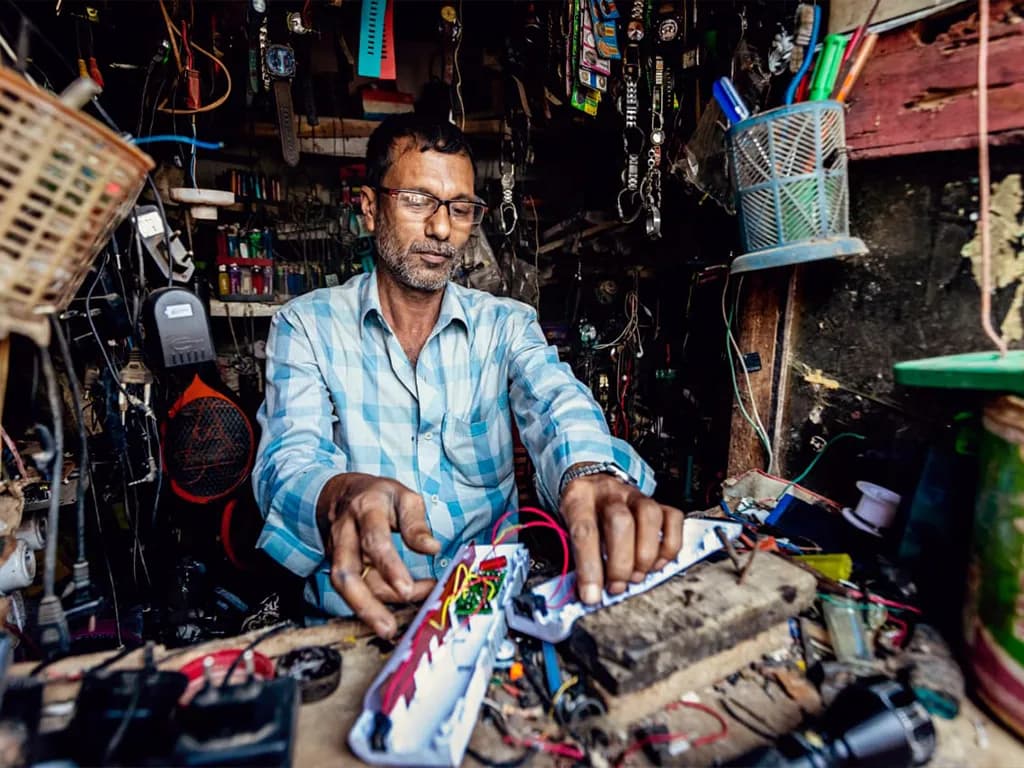
A repair shop that became collateral
A rural repair business runs on cash and memory: no accounts, no statement, nothing a lender can read. Recording purchases, sales and customers turned a decade of trading into an enterprise profile — and the profile, not the shop, is what a bank could finally assess.
Six cattle and a published price
Before the cycle, the sale price was whatever the broker offered on the day. Now the per-kilogram rate — B2B price, platform fee, logistics, vet care and the net farmer rate — is on the screen before the animal leaves the shed. The negotiation ends before it starts.
Composite accounts drawn from field observations. Named stories require the producer's consent before publication.
Methodology
How we measure, and what we don't claim
Impact is measured through an Impact Monitoring and Measurement (IMM) framework covering four value drivers and eleven stated outcomes. Each project cohort has a household baseline recorded at enrolment; change is measured against that baseline, not against a national average.
Participation: share of women, persons with disabilities and caregivers, recorded per project
Income: household income change against the enrolment baseline
Production: yield or weight gain against the district baseline and the project SOP
Price: realised sale price against the published indicative rate
Verification: cooperative and field-officer sign-off on every recorded value
Reporting cadence: monthly project updates to investors, and an annual impact report. We do not claim attribution for change we cannot trace to a project cohort.
Aligned with
SDG 1 · No poverty
SDG 2 · Zero hunger
SDG 5 · Gender equality
SDG 10 · Reduced inequalities
SDG 12 · Responsible consumption
SDG 13 · Climate action
FAQ
Questions we get asked
How does DigiGram Ventures ensure inclusivity?
Inclusivity is a design constraint, not a reporting line. Our goal is that at least 50% of Shathi partners are women and people facing disability-related barriers. Today 70% of participants are women, 15.4% are persons with disabilities and 19.2% are caregivers for persons with disabilities. Every critical journey has to work for someone with low literacy, limited smartphone confidence or a disability — which is why field-assisted completion and Bangla-first design exist.
Are returns guaranteed?
No. Every figure on this site is an estimated range, not a promise. Returns come from a real production cycle — animals gain weight, a crop yields, output is sold — and a cycle can underperform through disease, weather or a market move. We publish the mechanism, the monitoring and the mitigation for each project, and we disclose what happens if a cycle falls short. Capital is at risk.
How is the farmer's share calculated?
After project costs and the investor payout, the Shathi partner receives up to 50% of the remaining profit. The split is written into the contract-farming agreement before the cycle starts, and the per-kilogram price breakdown — B2B rate, platform fee, logistics, warehouse and vet care, net farmer rate — is shown to the farmer before they commit.
What is the minimum investment and how do I pay?
Projects are sold in units and the unit price is set per project — currently from ৳ 10,000 to ৳ 1,30,000. Payment is by mobile financial service (bKash, Nagad) or bank transfer online, and by cheque collection or direct bank deposit offline. Refunds are available within 15 days of the project start date; after that the capital is committed to the cycle.
How do I follow a project after I invest?
Each project publishes milestone updates — collection, project start, mid-cycle, harvest or sale, and payout — along with a monthly report covering production progress, financial summary and the social impact recorded for the cohort. Updates arrive in the Shathi app and by SMS.
How does DigiGram measure impact?
Through an Impact Monitoring and Measurement framework built around four value drivers — rural poverty, the gender gap, disability and environment — mapped to eleven stated outcomes. We track the share of women and persons with disabilities engaged, income change for Shathi partners against a household baseline, yield against the district baseline, and price realised against the published indicative rate.
Is DigiGram a lender?
No. DigiGram assesses, verifies, develops, originates, monitors and connects users to institutions. Where a bank or MFI is involved, that licensed lender retains full authority over KYC/AML, credit approval, pricing, disbursement and recovery. Shathi Sheba provides decision support; it does not approve credit.
What is DigiGram's long-term goal?
Empowering 20,000 Shathi input partners with improved, sustainable livelihoods and market access by 2030, and reaching 50,000 smallholder farmers — particularly women and persons with disabilities — living below or near the poverty line in rural Bangladesh.
Invest in people, empower communities, shape a sustainable future.